
Drive Highway 1A between Cochrane and Calgary and you'll pass a long, quiet stretch of grassland rolling down to the Bow River. Cattle graze there in winter. Hikers and cyclists use the trails in summer. It looks like it's always been empty.
It hasn't. A little over a century ago, more than 180 men worked a sandstone quarry on this land, and a small town grew up around it. The stone they cut is still standing in some of Alberta's most important buildings.
This is the story of Glenbow.
A water stop becomes a quarry town
Glenbow started as a water stop on the Canadian Pacific Railway main line, a place for steam engines to fill up on the way west out of Calgary. Not much more than that.
Then, in 1905, Alberta became a province. A new province needs a legislature, courthouses and schools, and those buildings needed stone. The hills along the Bow had good sandstone close to the railway, and around 1907 a quarry opened at Glenbow.
A real community followed. Single men and the quarry managers lived in workers' quarters near the pit. Married men and their families lived in Glenbow Village nearby. There was a railway station, a school, a general store and a post office. There was even a union labour hall, one of the only public buildings in the settlement.
The stone that built a province
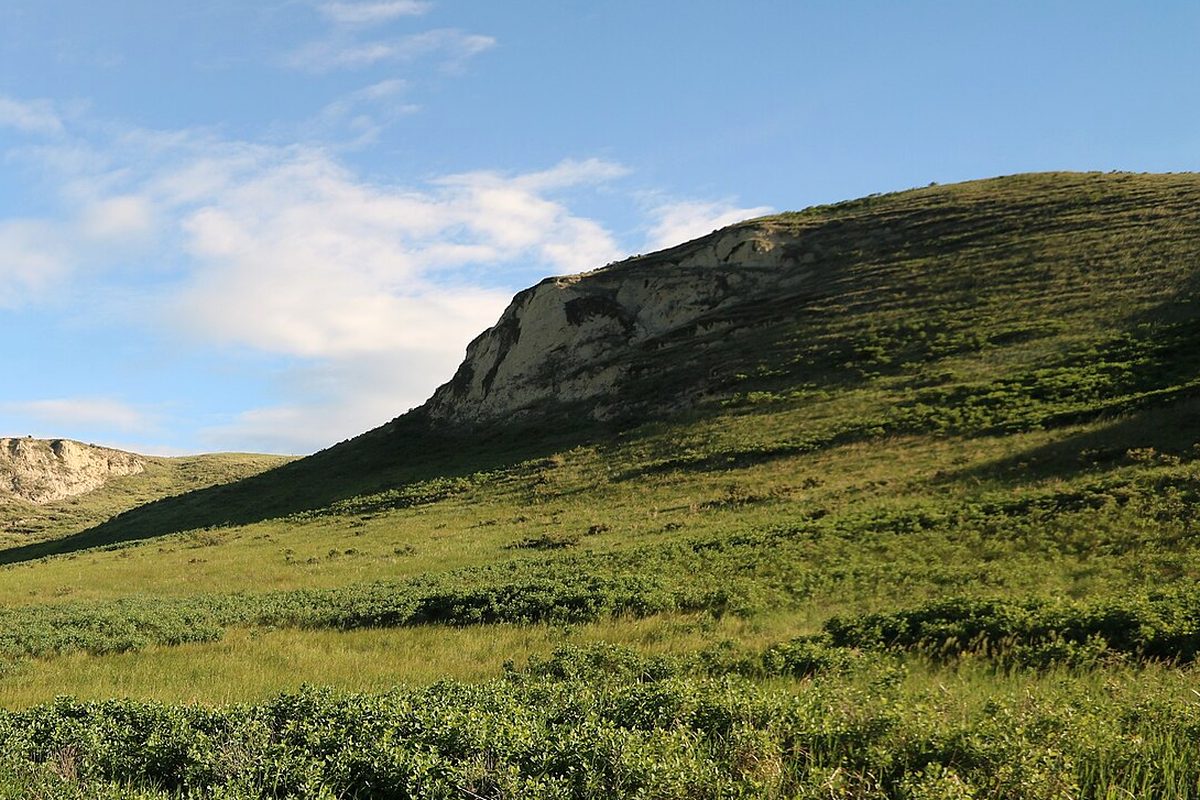
Exposed sandstone on the hillside. Photo: davebloggs007 / Flickr, CC BY 2.0.
Glenbow sandstone was cut into blocks and finished decorative pieces. It went into the Alberta Legislature Building and Government House in Edmonton. In Calgary, it went into Courthouse No. 2 and the old Normal School, which is now the McDougall Centre.
So the next time you see a photo of the Legislature, there's a good chance some of that stone came from a hillside between here and Calgary.
The people of Glenbow
What makes Glenbow special is how much we now know about the people who lived there. Since the late 2000s, the Calgary Centre of the Archaeological Society of Alberta has been studying the site. Because the town was so short-lived and the land went back to ranching, a lot was left undisturbed.
In 2017 the team relocated and excavated the cornerstone of the union hall, last photographed in 1973. One of the names carved on it led researcher Shari Peyerl to a stonecutter named Joseph Towill. He had crossed from Scotland hoping to audition for the Metropolitan Opera in New York. He ran out of money, heard there was work in Calgary, and settled here instead. In 1908 he was part of a national championship football team, what we'd call soccer today.
Another name from the records is Ida McCormick, the only woman known to have worked at the quarry, possibly as its accountant or secretary. All told, the research traced 72 families connected to Glenbow.
Why Glenbow emptied out
Glenbow's boom didn't last. Once the big government buildings were finished, demand for sandstone dropped, and the quarry closed in 1912.
The owner, Chester Rhodes de la Vergne, opened a brick plant in the valley to give families another source of work. Then the First World War began, and the brickyard shut down too. People drifted away to the cities or to jobs on nearby ranches. By 1927 the last residents were gone.
The buildings didn't survive either. Some were carted away for lumber, some were moved whole, and some were burned. Today a few foundations, piles of unused bricks and the old quarry workings are most of what's left.
From ranch to provincial park
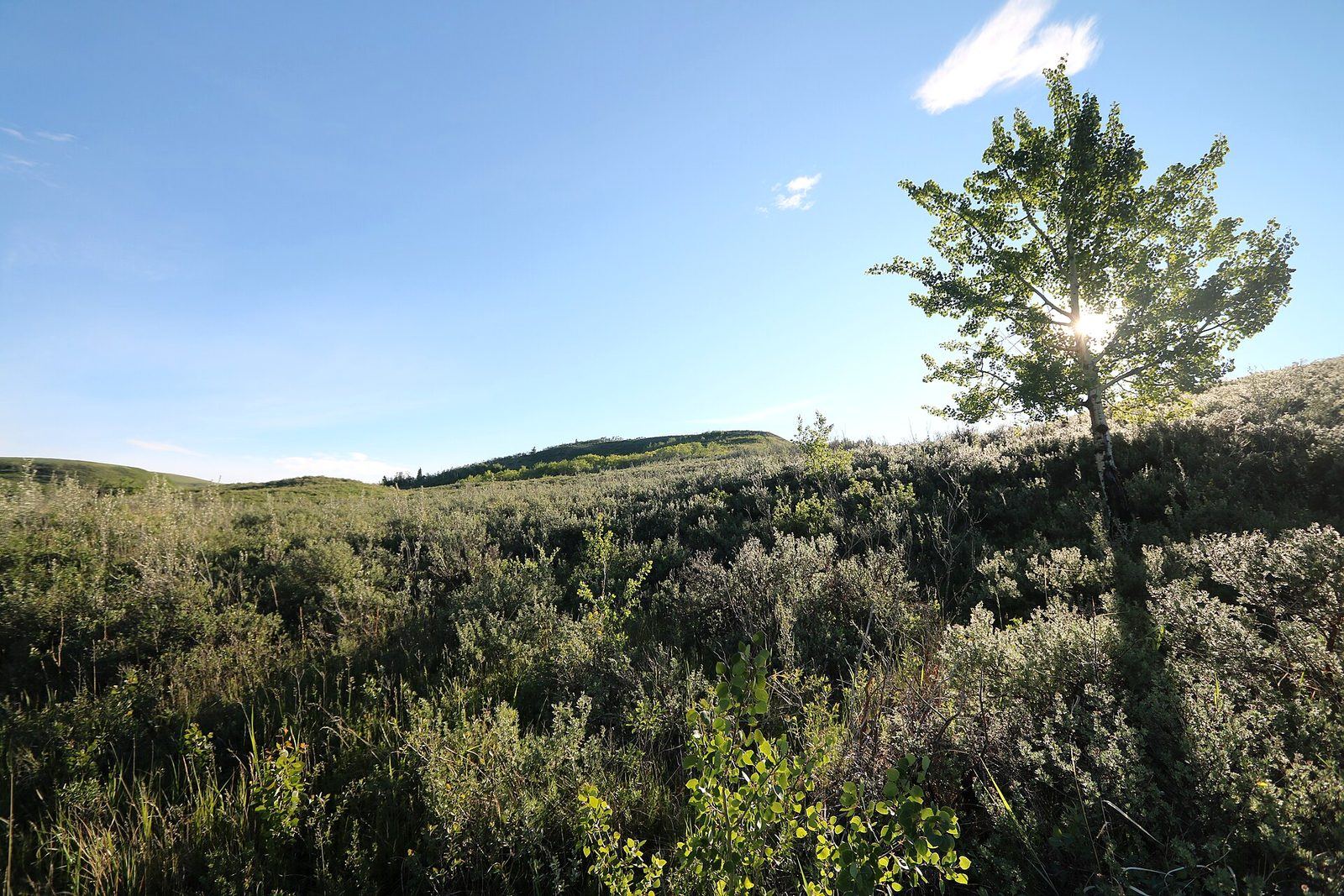
Today the land is part of Glenbow Ranch Provincial Park. Photo: davebloggs007 / Flickr, CC BY 2.0.
In the 1930s the land became part of a ranch owned by Eric Harvie, and it stayed a working ranch for decades. In 2006 the Harvie family and the Government of Alberta arranged for the land to be preserved, and Glenbow Ranch Provincial Park was officially created in 2008. It opened to the public in 2011.
Today the park has more than 25 kilometres of pathways, with viewpoints over the Bow River and interpretive signs that tell parts of this story. It's still used as winter range for cattle, much like the bison that grazed these hills long before the railway came.
Glenbow today
If you live in Cochrane, you've probably noticed the name around town. Our Glenbow neighbourhood shares it. (If local history is your thing, our earlier post on the Cochrane Ranche tells how a failed ranch gave the town its name.)
Next time you're out on the Glenbow Ranch trails, stop at a viewpoint and picture it: a railway station, a schoolhouse, a store, families on their porches, and the sound of men cutting stone that would end up in the Legislature. A whole town, here for about 20 years, then gone.
Thinking about a move in or around Cochrane? Our neighbourhood guide is a good place to start, and we're always happy to talk it through.
Wayne & Sean Burton, REMAX West Real Estate, Cochrane, Alberta
Sources: Alberta Parks: History of Glenbow Ranch; CBC News: Glenbow ghost town archaeology; Archaeological Society of Alberta: Glenbow Project; Government of Alberta: park opening release; Glenbow Ranch Park Foundation booklet


Comments:
Post Your Comment: